Then vs now: what AI changes at each stage of an animation pipeline
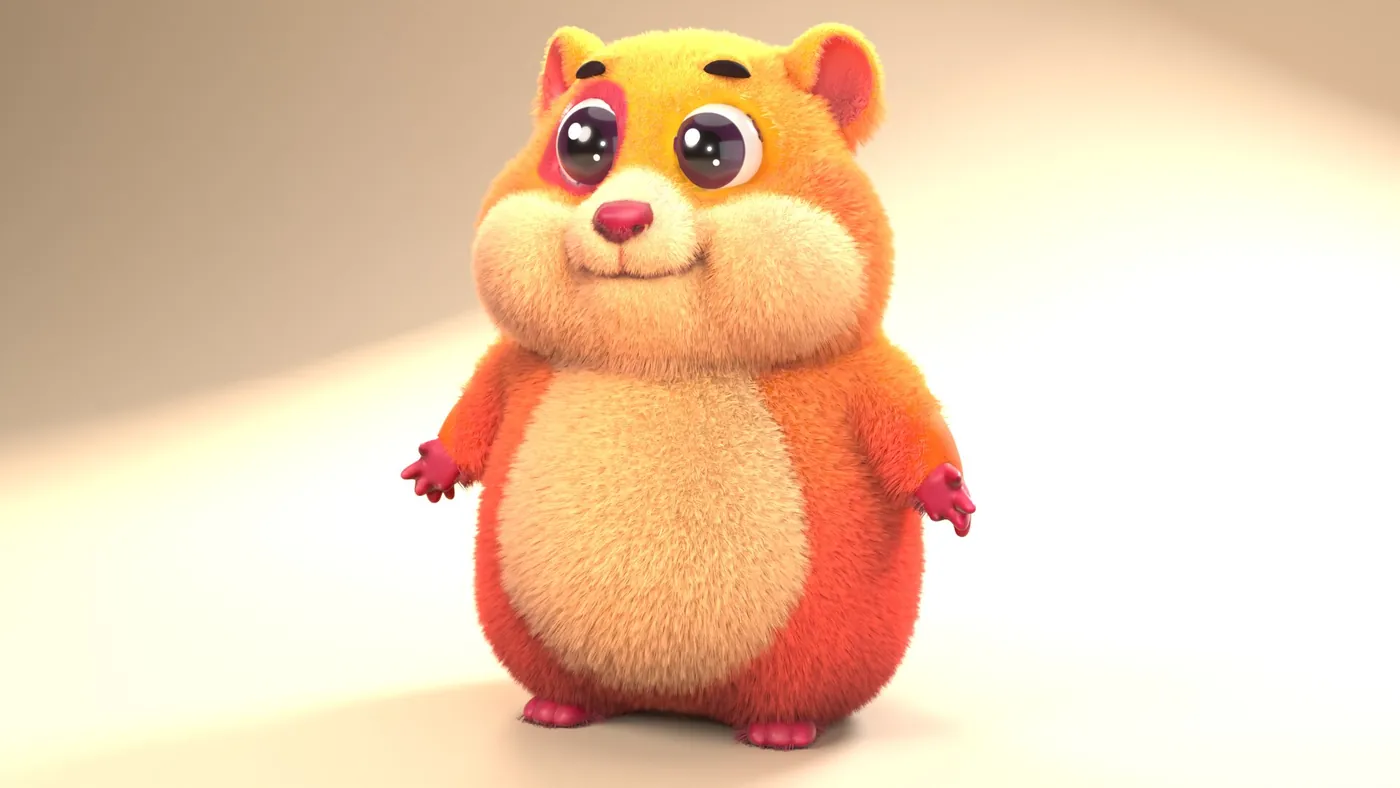
"AI animation" can mean anything from a single prompt to a full studio pipeline. So here is what it means for us, stage by stage. We use the same seven stages any character studio uses, and we show them on our own mascot, Ham. For each one: how it has been done for decades, how we do it today, and the time it takes.
The short version: a 60-second character piece used to take about 3-4 months from first sketch to delivery. Today it takes us about 3-4 weeks. Every project is different, but that is the shape of it.
1. Sketching: 1-2 weeks → 1-2 days
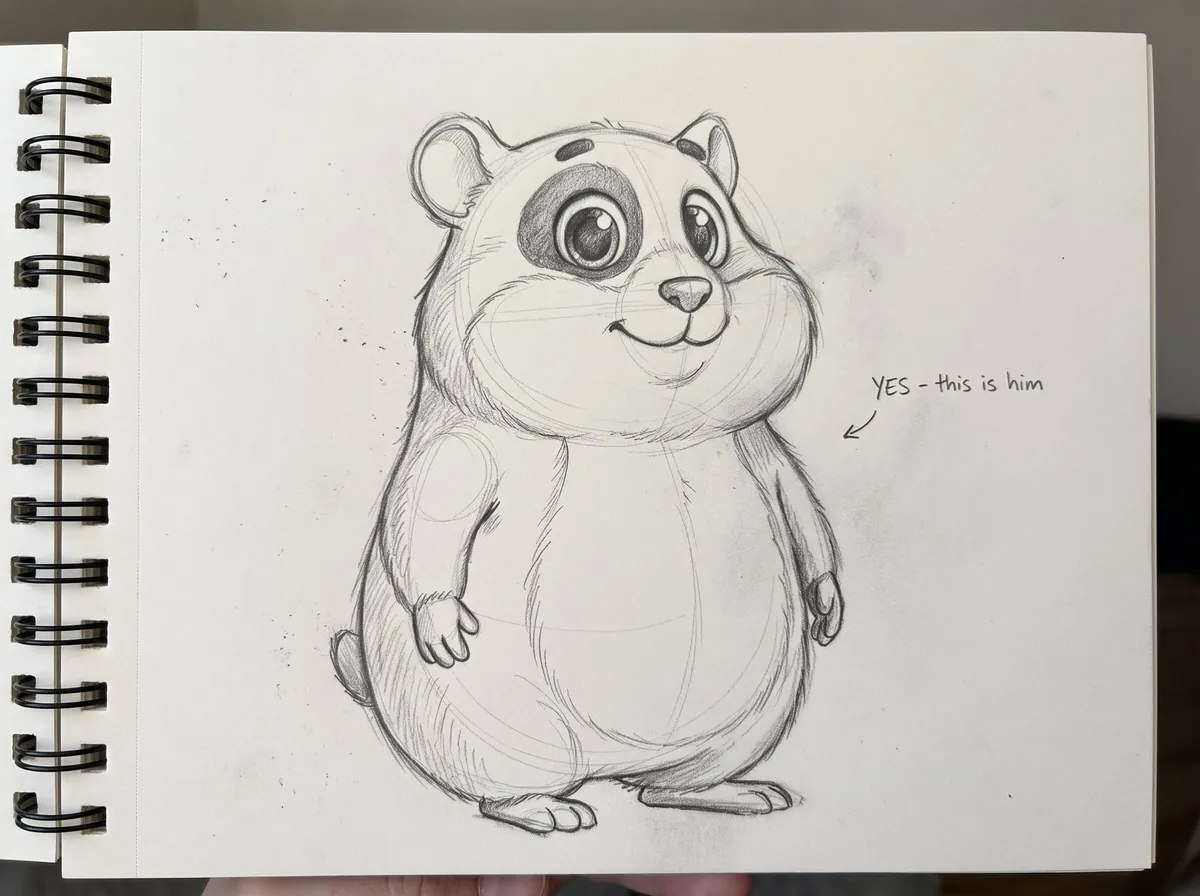
Then: an artist fills sketchbooks, dozens of passes to find one shape that feels right. Every new idea costs a day.
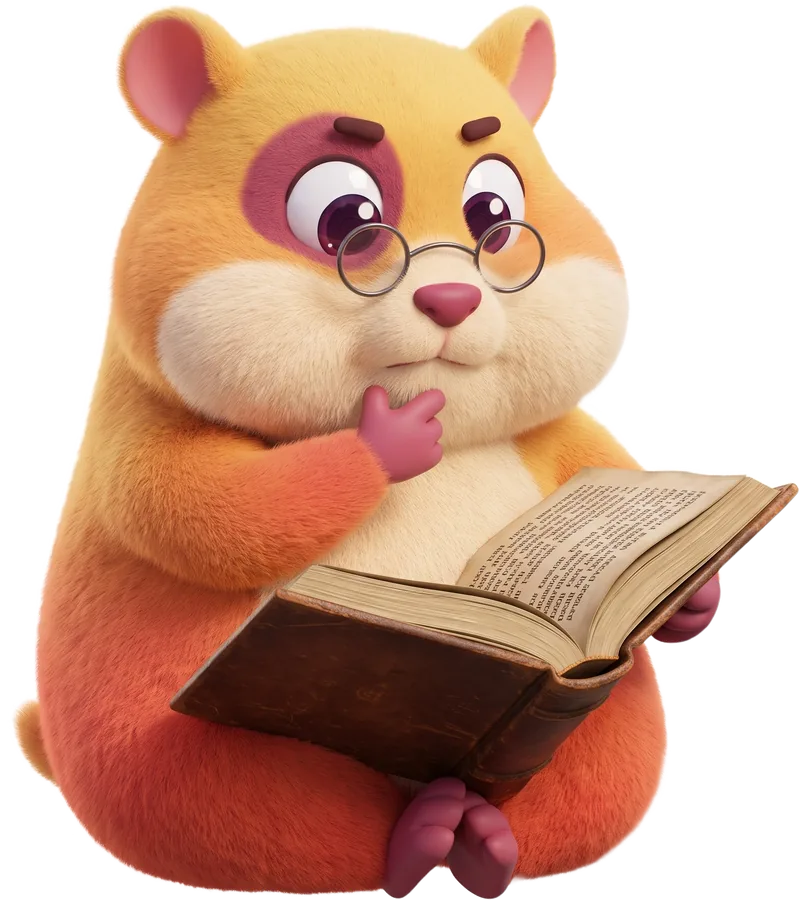
Now: we still sketch the idea first. Then we explore many directions in an afternoon, keep the one that makes us smile, and redraw it.
2. Character design: 2-3 weeks → 2-3 days
Then: turnarounds, expression sheets and colour keys drawn view by view, so every artist draws the character the same way.
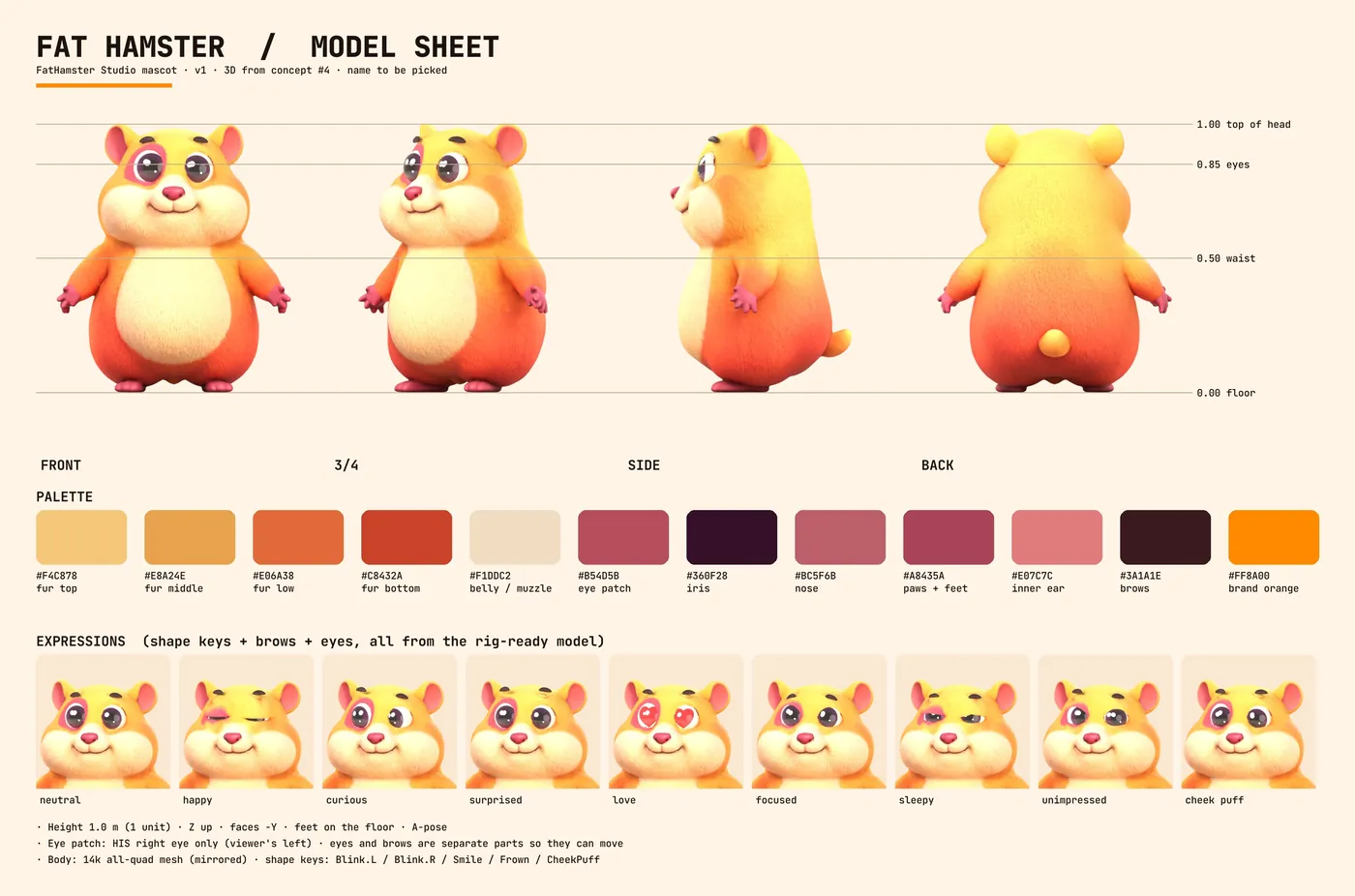
Now: one approved design becomes front, side and back views, expressions and poses in hours. Artists correct every sheet until it is on-model. Ham's model sheet has a turnaround, heights, palette and nine expressions.
3. 3D modelling: 3-6 weeks → 3-5 days
Then: a modeller sculpts the character from scratch, then rebuilds it as clean, animation-ready geometry. Weeks pass before anyone sees it move.
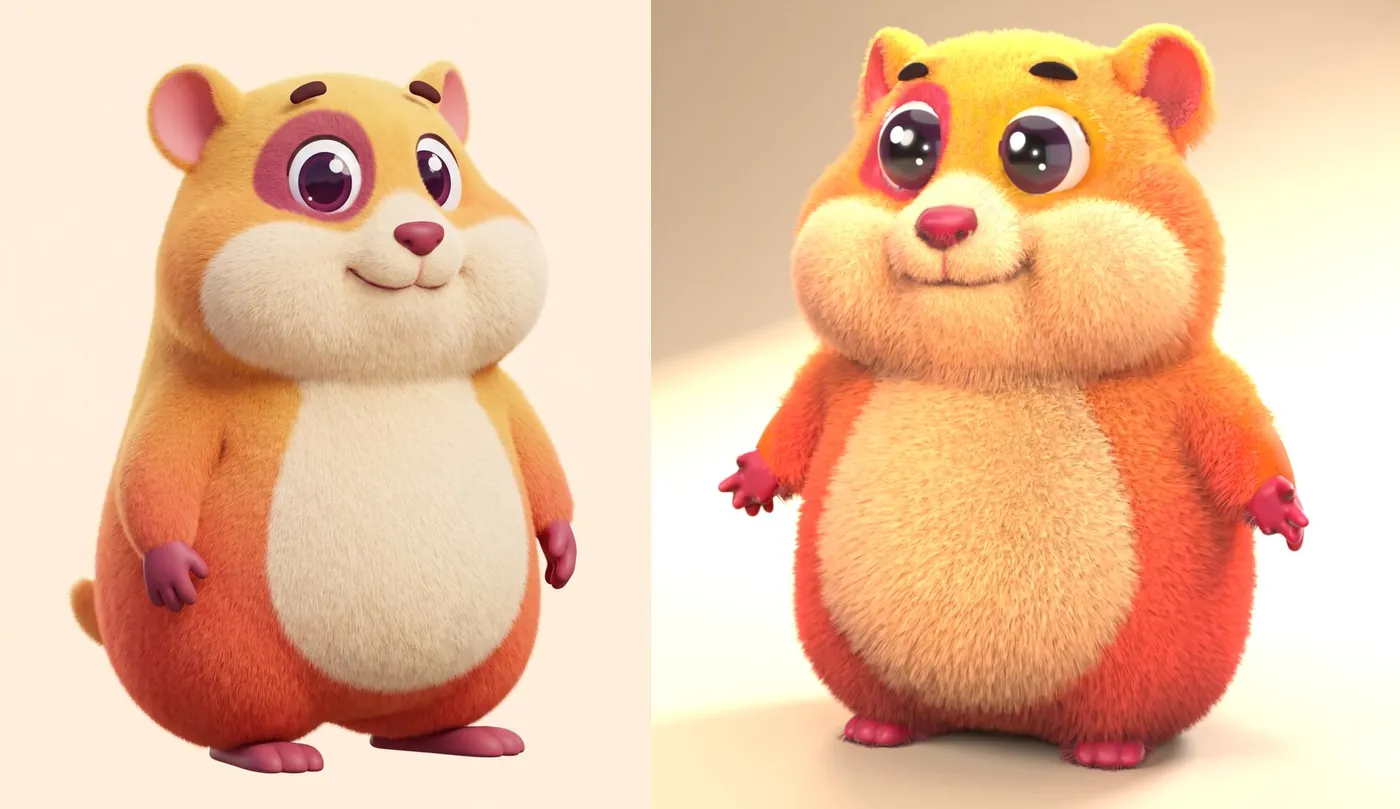
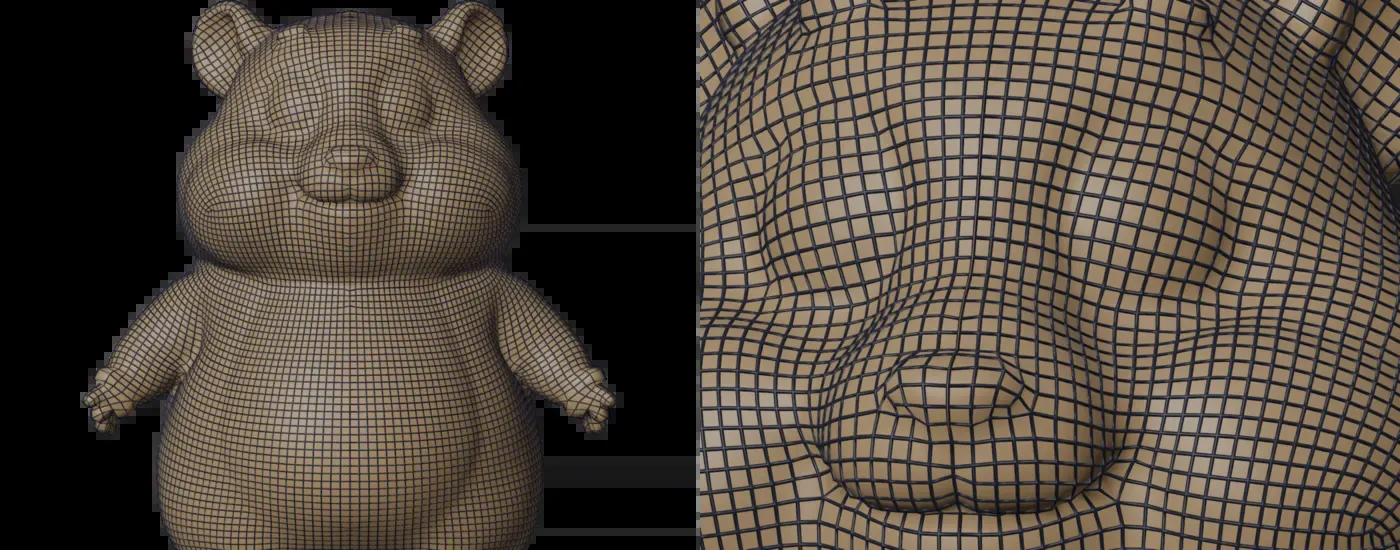
Now: the design becomes a rough 3D scan in minutes. Then we rebuild it as clean, rig-ready topology with real eyes, brows and face shapes. For Ham, a 1.9-million-triangle scan became about 14,000 clean faces.
4. Texturing and look-dev: 2-4 weeks → 2-4 days
Then: textures painted by hand, fur groomed, lights tweaked over many slow test renders.
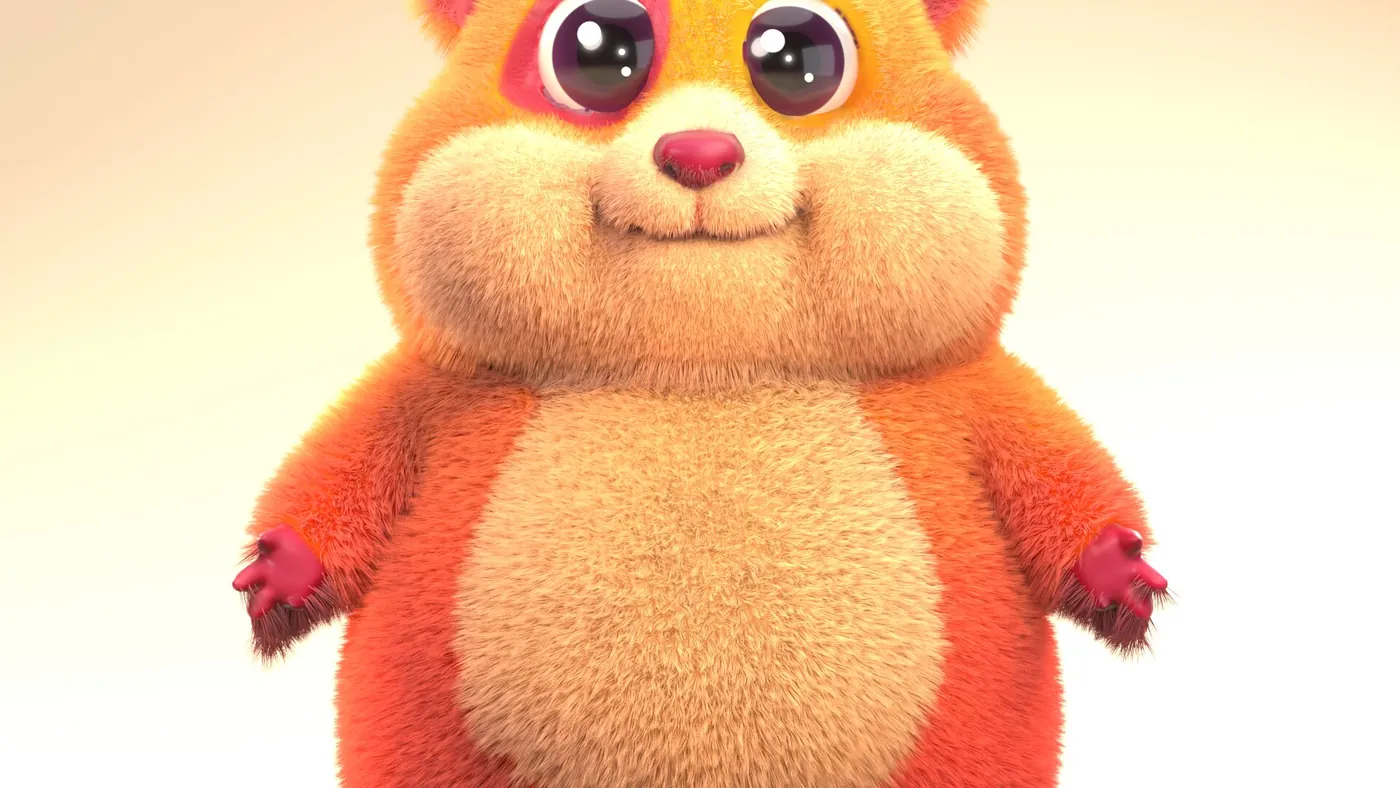
Now: colour and detail are baked from the scan and refined by hand. Lighting is set up once and reused for every shot. Ham still took five look-dev rounds, from washed-out pastel to the final furry version.
5. Animation: 1 week per 10 s → 1 day per 10 s
Then: keyframe by keyframe, 24 drawings or poses for every second, timed, inbetweened and polished by a team.
Now: we direct shots: key pose, camera, timing and acting notes. Motion models do the heavy lifting. Animators fix, time and polish every beat.
6. Voice and sound: 1-2 weeks → 1 day
Then: book a voice actor and a studio for every line, then build sound effects layer by layer in a long mix.
Now: one character voice, approved once and reused every episode. Lip sync is generated and checked by eye. A sound library gives us a 30-layer mix in an evening.
7. Edit and delivery: 2-3 weeks → 2-3 days
Then: one master edit, then weeks of re-cuts for every format and channel.
Now: cut once, then every format: reels, ads, explainers, series episodes. New episodes in days, not months.
Seven stages, and I'm in every one. Nobody asked if I wanted a stunt double.
What doesn't change
This is the part that matters most to us, and probably to you. Three things are exactly as they were:
- Story, acting and comic timing. A tool can make a shot. It can't tell you whether the joke lands.
- An artist directs and signs off every shot. Nothing goes out because a model produced it.
- Characters stay on-model, episode after episode. The model sheet is still the contract, and people still check against it.
Where the time really goes now
The old pipeline spent most of its time making things. The new one spends more of it choosing and fixing. Generating four concepts takes minutes; picking the right one, and spotting that one of them has the eye patch on the wrong eye, takes a person. A scan arrives fast; making it blink takes craft.
That is also why the times above are ranges, not promises. The tools change every few months. Our pipeline is built so we can swap one in without changing how we work with you.
Want to see what this could mean for your project? Let's talk it through.